
Loading...
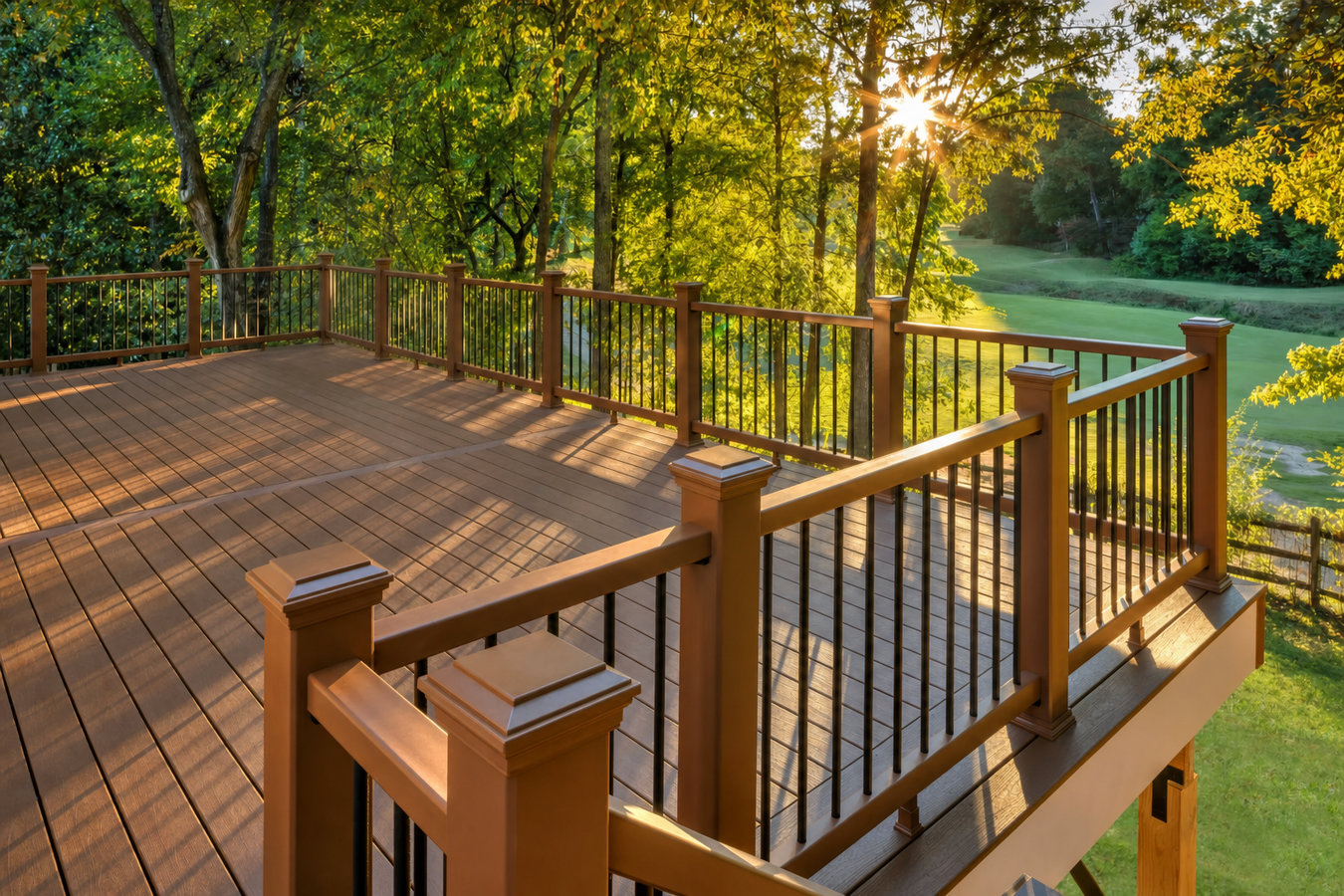
A railing that wobbles or does not meet Florida's height requirements is a real safety risk. We install deck railings in Winter Haven that are anchored correctly, built to code, and built to last in Central Florida's climate.
Deck railing installation in Winter Haven covers new railing on elevated decks, replacement of worn or unsafe existing systems, and railing added to older decks that were built before current Florida safety requirements. Most standard installations are completed in one to two days of on-site work - the full timeline including permit approval typically runs two to four weeks.
If your deck sits 30 inches or more above the ground, Florida law requires a railing - and a railing that wobbles when you lean on it is not doing its job. Whether you are replacing a failing wood system or adding railing to a deck that never had one, the process starts with a permit through Winter Haven's Building Division. Homeowners who are also planning a new elevated deck or a larger build often pair railing work with our multi-level decks service so the structure and safety components are designed and inspected together.
Give your railing a firm push from the side. If it moves, flexes, or feels loose at the base of any post, the anchoring has failed or was never done correctly. A railing that moves is not doing its job, and in a home with children or elderly family members, that is a real safety concern - not something to monitor and revisit later.
Winter Haven's humidity is relentless, and wood railings that were not properly sealed will show it quickly. Dark staining at the base of posts, soft or spongy wood when you press on it, or orange rust streaks running down from screws are signs that moisture has gotten into the structure. At that point, replacement is usually the right call - a repair rarely holds.
If your deck sits higher than about two and a half feet above the yard and has no railing, it does not meet Florida's current building requirements. This is especially common on older homes in Winter Haven where decks were built before current codes were in place. Beyond the code issue, an unguarded elevated deck is genuinely dangerous for anyone using the space.
Stand back and look at the gap between your vertical railing pieces. If you can fit your fist through easily, the spacing is likely too wide to meet current safety standards. Florida requires that the gaps be too narrow for a 4-inch sphere to pass through - meaning a small child cannot get their head stuck between them. This is a common issue on older railings.
We install aluminum, composite, and pressure-treated wood railing systems on new and existing decks across Winter Haven and the surrounding Polk County communities. Every job includes the permit application and final inspection coordination - we handle both so you have a clean permit record when the job is done. For homeowners building a new deck at the same time, we often handle railing as part of a larger custom deck design and build project so the entire structure is designed together and passes all inspections in one process.
In Central Florida's humidity, the material you choose for your railing matters more than you might expect. Aluminum is the most durable option here - it does not rust, rot, or warp, and it requires almost no maintenance after installation. Composite systems give you more color and style flexibility with similar durability. Pressure-treated wood is a solid choice for homeowners who prefer the traditional look and are comfortable with periodic sealing. We will walk you through the trade-offs during your estimate, including what each material typically costs per linear foot, so you can make the right call for your budget and maintenance preferences. For homeowners also planning a larger multi-level deck, combining railing and deck construction keeps the whole project on a single permit and inspection timeline.
Best for homeowners who want the lowest maintenance option - aluminum does not rust or rot in Winter Haven's humidity and requires no sealing or painting after installation.
Best for homeowners who want more color and style flexibility than aluminum offers while still avoiding the upkeep that bare wood requires in Central Florida's climate.
Best for homeowners who want a traditional wood look and plan to maintain the railing with regular sealing to protect it from moisture and UV exposure.
Best for homeowners with an older deck that was built without railing or with railing that no longer meets current Florida safety requirements.
Winter Haven's average annual humidity regularly exceeds 75 percent, and the city's location in the heart of the Chain of Lakes region means many homes face even higher moisture exposure from nearby water. That constant humidity is hard on untreated wood railings - it feeds mold, warps boards, and loosens fasteners faster than homeowners expect. Florida's hurricane season adds a second layer of demand: railings here need to be anchored to handle sustained wind loads that are irrelevant in most other states. This is one reason the Florida Building Code sets stricter structural requirements than the national baseline - and why a permit and inspection actually protect you rather than just slow the project down. Homeowners in Haines City and Eagle Lake face the same climate conditions as Winter Haven, and we work across all of those communities regularly.
Winter Haven enforces the Florida Building Code through its own Building Division, which means your contractor must pull a local permit and schedule a final inspection before the job is considered complete. This matters when you sell your home - buyers' inspectors and title companies routinely flag unpermitted deck work, and a railing without a permit record can delay or derail a sale. Many of Winter Haven's neighborhoods around the Chain of Lakes also have HOA design guidelines covering railing colors, materials, and styles. Getting HOA approval in writing before your contractor orders materials is essential - finding out after the fact that the railing does not comply is an expensive situation that is entirely avoidable with the right process upfront.
Reach out and we will have a short conversation about your deck - its size, height, and what you are hoping to change. Then we schedule a time to visit your home, measure the perimeter, and check the condition of the existing structure. We reply within one business day.
After the site visit, you receive a written estimate that separates labor and materials. We walk you through aluminum, composite, and wood options and explain what holds up best in Winter Haven's climate - so you can make an informed decision before committing to anything.
Once you approve the estimate and sign the contract, we submit the permit application to Winter Haven's Building Division on your behalf. This step typically takes one to two weeks. We handle all the paperwork - you do not need to contact the city or fill out any forms.
The crew completes most standard railing jobs in one to two days - removing old railing if needed, setting and anchoring posts, attaching rails, and installing balusters. We then schedule the final inspection with the city. Once the inspector signs off, we hand you the completed permit record to keep with your home files.
Free estimate, no obligation. We reply within one business day.
(863) 656-8746Unpermitted deck railing is one of the most common issues that surfaces during Florida home sales - and it is completely avoidable. We handle the permit application, coordinate the inspection with Winter Haven's Building Division, and hand you a completed permit record when the job is done. Your home's history stays documented and clean.
We recommend aluminum and composite systems for most Winter Haven homeowners because we have seen how wood railings hold up - or fail to - in this humidity. That recommendation comes from years of work in this climate, not just product preference. We will give you an honest assessment of what each material choice means in terms of longevity and maintenance.
A significant number of Winter Haven's lake-area neighborhoods have HOA design guidelines covering railing colors and materials. We ask about your HOA upfront and help you confirm approval before a single post is ordered. Finding out after installation that the railing does not comply with your HOA is an expensive situation - one we help you avoid.
The posts are the most important part of any railing system, and Florida's hurricane season means they need to be anchored to a higher standard than in most states. Every installation we do meets the structural requirements of the Florida Building Code, which is why our work passes inspection the first time. The North American Deck and Railing Association standards guide our installation practices.
Every homeowner who calls us for railing work gets the same straightforward process - a written estimate, a clear timeline, and a permit record at the end. No surprises, no shortcuts, and no unpermitted work that creates problems down the road.
Florida's railing height and spacing requirements are part of the state building code published by the Florida Building Commission. Local permits and inspections for railing work in Winter Haven go through the City of Winter Haven Building Division. Professional installation standards for deck railings are maintained by the North American Deck and Railing Association (NADRA).
Building a new deck from scratch? We handle design, materials, permits, and railing as a single project so everything is planned and inspected together.
Learn MoreEvery level of a multi-level deck needs properly anchored railing that meets Florida's height and spacing requirements - we install both the deck and the railing as one project.
Learn MoreFall is the busiest season for outdoor work in Winter Haven - our schedule fills up fast, so call or send a message now to lock in your date before the holiday rush.